
No products in the cart.
No-Plumbing Head Spa vs Plumbed Head Spa: Which Is Right for Your Salon?
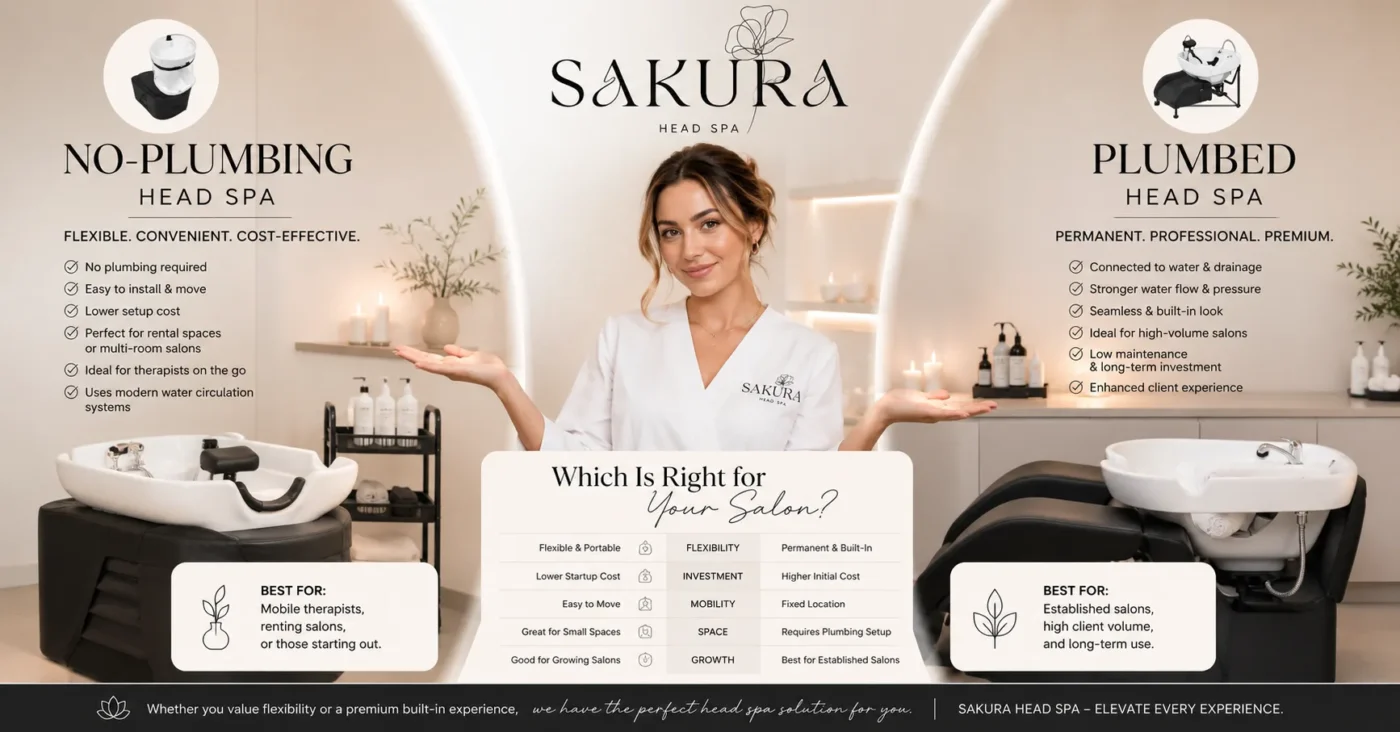
The Japanese head spa phenomenon has taken the Australian beauty industry by storm. As clients actively seek out deeply relaxing hair rituals that target scalp health, salon owners face a lucrative opportunity to upgrade their service menu. However, expanding your business with this high-ticket treatment requires introducing specialized equipment. The ultimate dilemma for most owners boils down to infrastructure: should you choose a flexible no plumbing head spa or invest in a traditional, permanently wired plumbed head spa?
Making the wrong equipment choice can lead to unexpected out-of-pocket setup expenses, structural delays, or operational bottlenecks that hinder day-to-day work. By looking at installation demands, water handling systems, treatment volume, and your business growth path, you can select the perfect model for your workspace layout.
What is a No-Plumbing Head Spa?
A no-plumbing system, often referenced as a portable head spa Australia salon owners rely on for versatility, is a completely self-contained unit. These setups run on independent internal water systems, utilising quiet built-in pumps alongside clean water and wastewater tanks hidden within the frame. They require absolutely zero pipe modifications, commercial council approvals, or costly property alterations.
Because these units are completely unattached to property lines, you can easily reposition them anywhere inside your workspace. If you run a home studio, lease a tight space, or want to test head spa services before fully remodeling your commercial space, this setup allows you to get started immediately.
What is a Plumbed Head Spa?
A plumbed head spa is a fixed station wired directly into your building’s primary mains water supply and drainage grid. This installation mimics a standard commercial hair washing basin but incorporates specialized water halos, steam generators, and ergonomic mattress beds engineered for long, luxurious holistic treatments.
A permanent fixture offers seamless convenience for high-turnover setups. Because it pulls water directly from your building mains, you never have to pause between back-to-back clients to manually manage water containers.
Comparing Installation, Water Handling, and Client Volume
| Operational Feature | No-Plumbing Head Spa | Plumbed Head Spa |
| Plumbing Needs | None. Relies on internal tanks and integrated pumps. | High. Demands direct connection to mains and drainage lines. |
| Installation Cost | Very low. Out of the box, plug-and-play installation. | High. Involves trade callouts, layout re-piping, and structural approvals. |
| Water Handling | Manual. Tanks require emptying and refilling throughout the day. | Automatic. Continuous hot water supply with continuous drainage. |
| Mobility | 100% portable. Can be moved around your room or to new lease sites. | Fixed station. Cannot be repositioned without heavy remodeling. |
| Daily Volume Capacity | Best for 1 to 4 treatments daily, or spaced-out bookings. | Best for back-to-back, high-volume commercial schedules. |
Choosing the Perfect System for Your Space
When to Invest in a No-Plumbing Option:
- You are renting a commercial space with strict lease agreements that prohibit plumbing modifications.
- You want to avoid premium trade fees or complex local council utility sign-offs.
- Your business structure functions on boutique, low-volume, or highly spaced premium bookings.
When to Go with a Plumbed Option:
- You own your property or have long-term lease parameters permitting extensive layout build-outs.
- Your business handles constant back-to-back schedules where manual tank upkeep creates downtime.
- You are developing a high-scale dedicated spa wing built exclusively around scalp treatments.
Pro Tip: Regular cleaning is essential for both configurations. No-plumbing versions require emptying and sanitizing the integrated water tanks daily to keep the interior pristine. Plumbed variations need line flushing to prevent chemical residue buildup inside the continuous water loop.
Your Strategic Business Growth Path
Selecting the perfect unit dictates how quickly you can achieve a return on your investment. If your main goal is to test client interest quickly with lower upfront capital risk, a premium portable unit serves as an ideal entry-level foundation. It allows you to build a loyal local clientele without committing thousands to structural building renovations.
Alternatively, if you already have a bustling salon and a long waitlist of clients eager to book, investing directly in a fully plumbed station can unlock seamless, day-long productivity.
Take the Next Step for Your Salon
Every salon workspace has unique floor plans, budget considerations, and utility access constraints. If you want to review options tailored specifically to your exact layout, we highly recommend that you book recommendation call sessions with our specialist design staff at Sakura Head Spas.
Ready to bring this revolutionary service to life? Take a look at our complete range by exploring our product category pages, or fast-track your business expansion with our comprehensive starter package kits. If you are focused on industry-leading skills, explore our dedicated training page to master Japanese scalp care application techniques. Commercial businesses can also submit a wholesale enquiry form to secure premium salon equipment pricing options.
Frequently Asked Questions
How long does it take to set up a no plumbing head spa unit?
Setting up a portable unit is exceptionally quick. It usually takes under an hour to unbox, assemble the frame component pieces, fill the internal fresh water container, plug the water system into a standard electrical wall outlet, and start your treatments.
Do portable head spa systems include water heating capabilities?
Yes, premium portable units come equipped with fast integrated heating systems designed to keep water temperatures consistent and relaxing throughout the treatment cycle.
Can I upgrade from a portable system to a fixed plumbed unit later?
Absolutely. Many boutique owners start out with an adaptive portable setup to build consistent salon cash flow. Once client demand scales up, they transition to a dedicated, permanently plumbed system.